

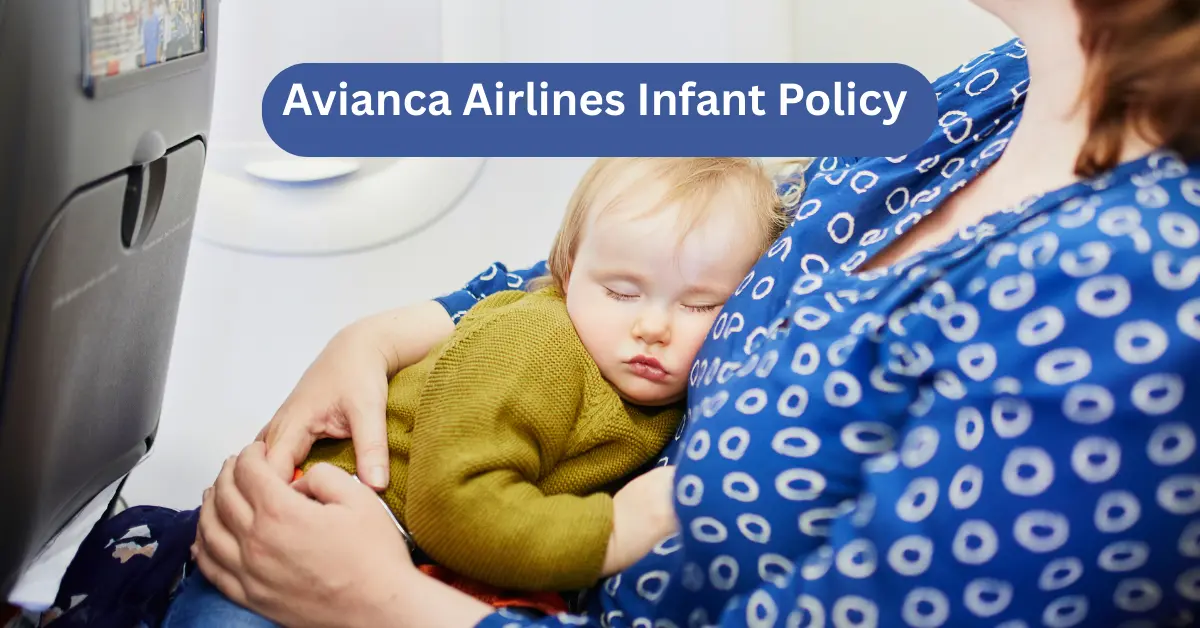
Avianca Airlines Infant Policy is designed with families in mind, making it possible to travel with little ones without too many complications. I've flown Avianca a couple times with young kids on routes through South America, and while nothing prepares you fully for airport chaos with a baby, their rules are pretty reasonable. Babies under 2 years old count as infants, and the big perk is that lap infants often pay little or nothing on many routes, especially domestic.
Avianca defines an infant as a child from 10 days old up to but not including their second birthday (24 months and 0 days). They accept newborns starting at 10 days, but younger requires a medical certificate. Only one lap infant per adult, and if your baby turns 2 mid-trip, you'll need to upgrade to a child ticket for the return. Let's go through the details so you can plan smoothly.
Who Qualifies as an Infant on Avianca?
Infants are kids under 2 years old on the date of travel. Age is checked for each flight segment, but the key is the return—if your baby hits 2 before coming back, the whole ticket gets reclassified as a child fare (ages 2-11), which means a seat and higher cost.
Minimum age: 10 days old. Under that, both mom and baby need a doctor's note saying it's safe to fly.
One adult can travel with up to two infants max, but only one on the lap—the second needs a paid seat with an approved car seat.
I remember checking this closely for a trip when my little one was close to turning 2. Better to book based on the oldest they'll be during the journey.
Lap Infant vs. Buying a Separate Seat
Most families choose lap infant to keep costs down. The baby travels on your lap, secured with a special infant belt the crew provides during takeoff, landing, and turbulence.
You can always buy a seat for the infant and use an FAA-approved car seat (must have the label "certified for use in motor vehicles and aircraft"). This costs a full child fare, but gives more space and better safety.
In Business Class, no car seats allowed for infants—they must use the lap belt only.
If flying with twins, one laps, the other gets a seat and pays the infant rate (usually discounted).
Fees for Lap Infants: Domestic and International Differences
This varies a lot by route.
Domestic flights within Colombia: Often completely free for lap infants, no ticket needed beyond adding to the reservation.
Some other domestic (like within Ecuador or Honduras): Similar discounts or free.
Most international routes: Lap infants pay about 10% of the adult fare plus full taxes and fees. Some regulated routes (like Colombia to Europe) get a 90% discount off the base fare.
Always taxes apply, so even "free" might have some charges.
If buying a seat: Full child fare, which is usually 75% or so of adult, depending on route.
A friend flying Bogotá to Miami paid around $80 in taxes/fees for their lap baby on a several-hundred-dollar adult ticket.
Adding an Infant to Your Booking
You must add the infant to the adult's reservation—same booking code.
During online booking: Often possible to add lap infant details.
After booking: Call reservations or use the contact center, especially for international where a separate infant ticket is issued.
Have birth date, name (as on document), and gender ready.
For international travel, infants need their own passport.
Do it early to avoid issues at check-in.
Documentation and Proof of Age
Always carry proof: Birth certificate, passport, or similar.
Agents might check, especially if the baby looks close to 2.
International: Baby's passport mandatory, plus any visas or parental consent if one parent traveling.
Medical cert for under 10 days.
Baggage Allowance for Infants
Avianca is decent here.
Lap infants (no seat): Extra 10 kg (22 lb) checked bag free, but only if the adult has Classic, Flex, or Business fare. Basic/Light adults—no extra for baby.
Plus, one stroller or foldable wagon gate-checked free (one per child).
Diaper bag counts as your personal item.
If infant has a seat: Full baggage per the child fare.
Car seats: Checked or gate-checked free; cabin if it fits dimensions (68 × 35 × 43 cm) and approved.
One stroller per child free.
Car Seats, Strollers, and Onboard Use
Approved car seats can go in cabin if you paid for a seat and it fits.
Otherwise, gate-check free.
Strollers to the gate, tagged, returned at jetbridge usually.
No charge for these.
Bassinets and Special Services
Limited bassinets on A330 and 787 aircraft—up to 3 per plane, in specific bulkhead seats.
Free, but request up to 72 hours ahead via contact center or airport.
For babies up to 12 months, max 11 kg (24 lb), 74 cm.
Not in Business, and not guaranteed if aircraft swap.
Special baby meals on long-haul Europe routes or Business Americas flights—request 48 hours ahead.
Crew warms bottles, changing tables in lavs.
Families often get priority boarding.
Tips for Smooth Travel with Infants
Book direct for easier additions.
Request bassinet early if eligible.
Pack extras in carry-on—delays happen.
For ear pressure, nurse or bottle on ascent/descent.
If turning 2 soon, confirm fare upgrade process.
Check partner airline rules if connecting.
Overall, Avianca Airlines Infant Policy keeps things affordable for lap travel while prioritizing safety. Domestic is easiest and cheapest, international adds some fees but still beats a full seat. Add the baby properly, bring docs, pack smart, and focus on enjoying the trip. We've made some favorite memories flying young—it's worth it.

|
|
|
|
|

|

|
|



Leave a Reply