

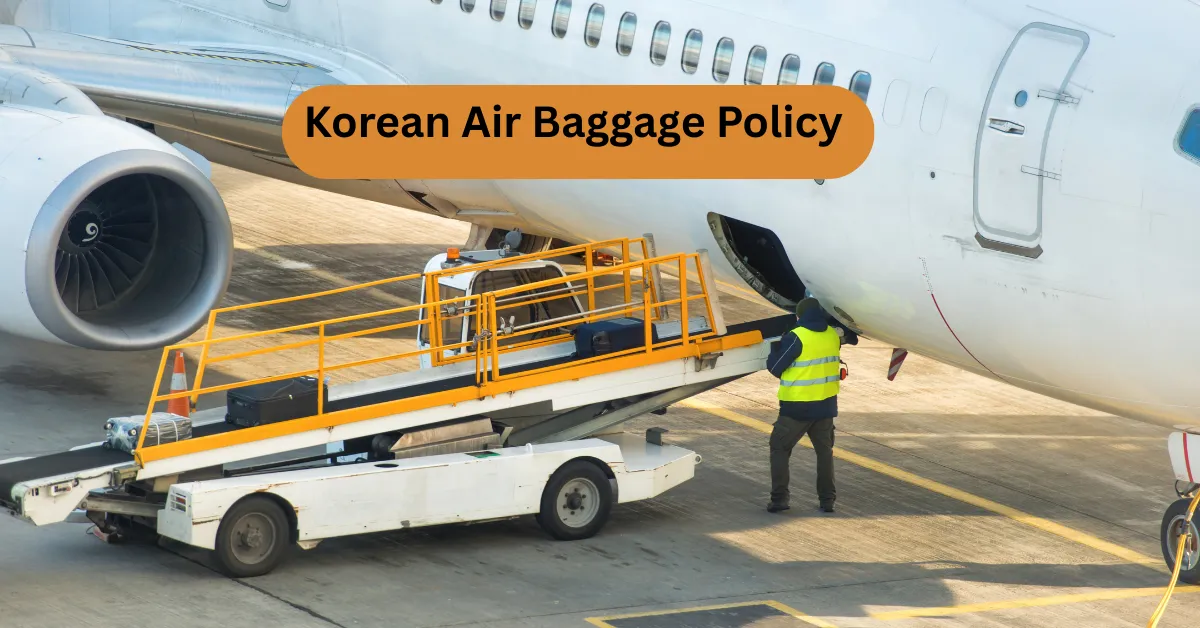
Korean Air Baggage Policy: Packing for a flight can feel simple—until baggage rules enter the picture. From weight limits to extra fees, understanding what you can bring (and how much it will cost) is essential for a smooth travel experience. The baggage policy of Korean Air is designed to provide clarity while offering generous allowances, especially on international routes.
Korean Air is known for its customer-friendly baggage rules compared to many global airlines. Most passengers receive a free checked baggage allowance, along with a reasonable carry-on limit. However, the exact allowance depends on factors such as cabin class, route, and fare type.
This guide breaks down everything you need to know—from carry-on limits and checked baggage rules to excess fees and smart packing tips—so you can travel confidently without surprises at the airport.
What Is the Korean Air Baggage Policy?
The Korean Air baggage policy outlines how much luggage you can bring on your journey, both in the cabin and in the cargo hold.
It covers:
- Carry-on baggage allowance
- Checked baggage limits
- Weight and size restrictions
- Excess baggage charges
- Special item handling
The policy is structured to accommodate different types of travelers, whether you’re flying economy on a budget or enjoying premium cabin perks.
Carry-On Baggage Allowance
Carry-on baggage is what you bring with you into the aircraft cabin. Korean Air allows passengers to carry essential items without additional fees, provided they stay within limits.
Standard Allowance
Economy Class:
- 1 carry-on bag
- Maximum weight: 10 kg (22 lbs)
Prestige (Business) & First Class:
- 2 carry-on bags
- Combined weight: up to 18 kg (40 lbs)
Size Limits
Each carry-on bag must not exceed:
- 55 cm x 40 cm x 20 cm (including handles and wheels)
Personal Item
In addition to your carry-on, you may bring:
- Handbag, laptop bag, or small backpack
This makes it easier to keep important items like documents, electronics, and valuables close during your flight.
Checked Baggage Allowance
Checked baggage is stored in the aircraft’s cargo hold. Korean Air offers a generous free checked baggage allowance, especially on long-haul international routes.
Economy Class
- 1–2 pieces (depending on fare type and route)
- Each bag: up to 23 kg (50 lbs)
Prestige (Business) Class
- 2 pieces
- Each bag: up to 32 kg (70 lbs)
First Class
- 3 pieces
- Each bag: up to 32 kg (70 lbs)
Size Restrictions for Checked Bags
Each checked bag must meet size limits:
- Maximum total dimensions: 158 cm (length + width + height)
If your bag exceeds this size, it may be classified as oversized and incur additional fees.
Excess Baggage Fees
If you exceed your baggage allowance, Korean Air applies excess baggage charges.
Types of Excess Charges
1. Overweight Bags
- 23–32 kg: Additional fee
- Above 32 kg: Not accepted as checked baggage
2. Extra Pieces
- Charged per additional bag beyond allowance
3. Oversized Bags
Fees apply if dimensions exceed 158 cm
Fee Variations
Fees depend on:
- Route (domestic vs. international)
- Destination region
- Cabin class
Long-haul international routes usually have higher excess baggage fees.
Special Baggage Rules
Korean Air allows passengers to carry special items, but additional conditions may apply.
Sports Equipment
- Golf bags, skis, and bicycles may be included in the free allowance
- Oversized equipment may incur fees
Musical Instruments
- Small instruments: Allowed as carry-on
- Larger instruments: Must be checked or booked as an extra seat
Infant and Child Baggage
Passengers traveling with infants may bring:
- Stroller
- Car seat
- Additional checked baggage (varies by ticket)
Restricted and Prohibited Items
For safety reasons, certain items are not allowed in checked or carry-on baggage.
Prohibited Items Include:
- Explosives and flammable materials
- Toxic substances
- Certain batteries and electronic devices
Restricted Items:
- Liquids in carry-on must follow airport security rules
- Lithium batteries must meet airline guidelines
Always check regulations before packing to avoid delays or confiscation.
Baggage Policy for International vs. Domestic Flights
Domestic Flights
- Lower baggage allowance
- Simpler fee structure
International Flights
- More generous free baggage allowance
- Higher fees for excess luggage
- Additional customs considerations
Since Korean Air operates many long-haul routes, international travelers benefit from more flexible baggage rules.
How to Add Extra Baggage
If you know you’ll exceed your baggage allowance, it’s best to plan ahead.
Steps to Purchase Extra Baggage:
- Log into “My Trips” on the Korean Air website
- Select your booking
- Add extra baggage
- Pay online
- Benefits of Prepaying:
- Lower fees compared to airport charges
- Faster check-in process
Baggage Rules for Codeshare Flights
If your flight is operated by a partner airline:
- The operating airline’s baggage rules may apply
- Allowances and fees may differ
Always confirm baggage details before travel to avoid confusion.
Lost, Delayed, or Damaged Baggage
While rare, baggage issues can happen.
What to Do:
- Report immediately at the airport baggage service desk
- File a Property Irregularity Report (PIR)
Compensation:
- Korean Air may compensate for delayed or damaged baggage
- Coverage depends on international aviation rules
Does Korean Air Offer Free Baggage?
Yes, Korean Air includes free baggage in most tickets.
Free Allowance Depends On:
- Fare type
- Cabin class
- Route
Premium cabin passengers enjoy higher allowances, while economy travelers still benefit from at least one free checked bag on most international routes.
Tips to Avoid Baggage Fees
Packing smart can help you avoid unnecessary costs.
1. Weigh Your Bags in Advance
Use a luggage scale to ensure your bag stays within limits.
2. Pack Efficiently
Roll clothes and minimize unnecessary items.
3. Use Carry-On Wisely
Maximize your carry-on allowance for heavy items.
4. Prepay for Extra Bags
Online payments are cheaper than airport fees.
5. Check Fare Rules Before Booking
Some fares include more baggage than others.
Important Rules to Remember
Before heading to the airport, keep these key points in mind:
- Weight and size limits are strictly enforced
- Fees vary depending on route and class
- Oversized and overweight bags cost extra
- Certain items are restricted or prohibited
- Codeshare flights may have different rules
Special Considerations for Travelers
Business Travelers
Higher baggage allowance makes it easier to carry work essentials.
Students
International student fares may include extra baggage.
Families
Traveling with children often includes additional baggage benefits.
Korean Air Baggage Policy: Final Thoughts
The baggage policy of Korean Air is designed to provide a balance between flexibility and operational efficiency. With generous allowances, especially on international routes, the airline ensures that passengers can travel comfortably without worrying too much about luggage restrictions.
However, understanding the details—such as weight limits, fees, and special item rules—is key to avoiding surprises. By planning ahead, packing smart, and reviewing your ticket conditions, you can make the most of Korean Air’s baggage policy and enjoy a stress-free journey from check-in to arrival.

|

|

|

|
|

|

|

|

|




Leave a Reply