

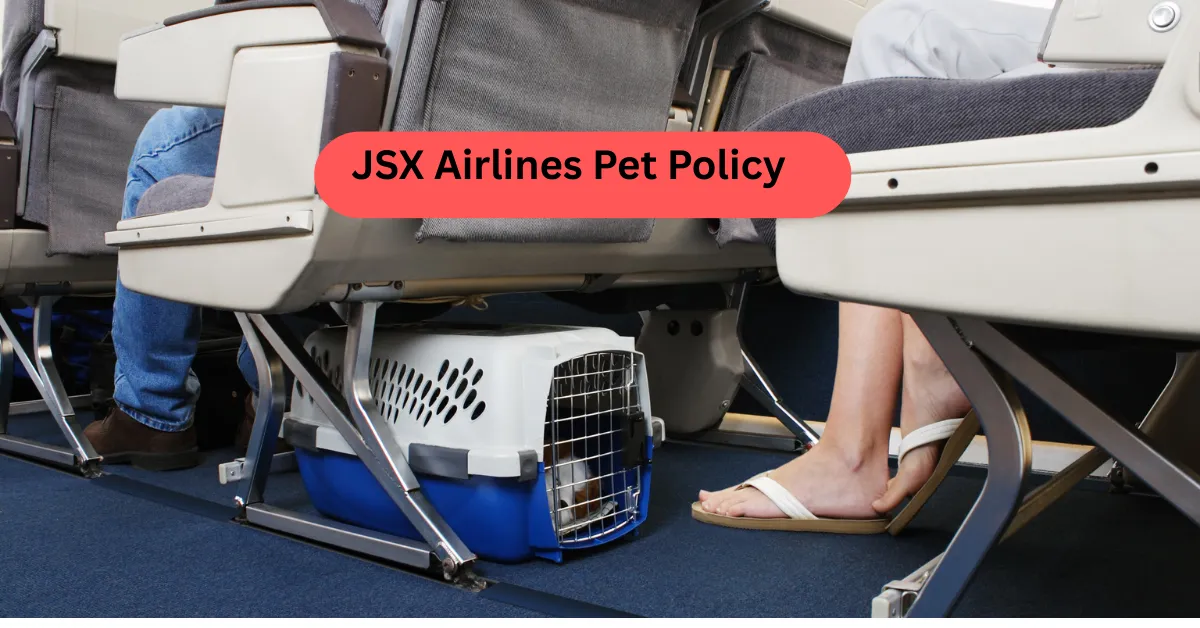
JSX Airlines Pet Policy: JSX Airlines offers a pet-friendly travel experience designed to make flying with your furry companion simple, comfortable, and less stressful than traditional commercial airlines. Unlike many carriers that require pets to travel as cargo, JSX allows small dogs and cats to travel in the cabin with their owners, creating a more relaxed and personal journey.
The airline operates a public charter model with fewer passengers, spacious seating, and simplified airport procedures, which can be especially beneficial for pets that may feel anxious in crowded environments. However, JSX has specific rules, eligibility requirements, and fees that travelers must understand before bringing a pet onboard. This guide walks you through everything—from eligibility and booking to carrier rules and travel tips—so you can plan confidently.
What Is JSX Airlines Pet Policy?
The JSX Airlines pet policy allows passengers to bring small pets in the cabin on most flights. The airline focuses on comfort and safety, meaning only pets that meet size, behavior, and carrier requirements are accepted.
Key highlights include:
Pets must travel in the cabin—cargo transport is not offered
Only small dogs and cats are typically permitted
Advance reservations are required due to limited space
Pets must remain inside an approved carrier for the duration of the flight
This passenger-first and pet-friendly approach sets JSX apart from many traditional airlines.
Does JSX Airlines Allow Pets in the Cabin?
Yes, JSX Airlines allows pets to travel in the cabin, which is one of its biggest advantages. Since JSX flights operate with fewer passengers, pets benefit from a quieter and more relaxed environment.
However, there are important conditions:
- Pets must fit comfortably in a soft-sided carrier
- The carrier must be placed under the seat
- Pets must remain inside the carrier throughout the flight
- Only a limited number of pets are allowed per flight
Because availability is limited, booking early is strongly recommended.
What Types of Pets Are Allowed?
JSX Airlines generally permits:
- Small dogs
- Domestic cats
Pets must be well-behaved, non-aggressive, and healthy enough to travel. Exotic animals, large pets, or animals that pose safety risks are not allowed onboard.
Service animals are handled separately under federal guidelines and may have different requirements.
Size and Carrier Requirements
To ensure safety and comfort, JSX enforces strict size and carrier guidelines.
Carrier Rules
- Must be soft-sided and well-ventilated
- Must fit under the seat in front of you
- Must be leak-proof and secure
Pet Size Guidelines
- The pet must fit comfortably inside the carrier
- Must be able to stand, turn, and lie down naturally
If your pet is too large to fit in a carrier under the seat, it will not be permitted onboard.
How to Add a Pet to Your Booking
Traveling with a pet on JSX requires advance planning. You cannot simply show up at the airport with your pet without prior approval.
Booking Process
- Book your flight ticket
- Contact JSX customer support to add your pet
- Confirm pet availability on your flight
- Pay the applicable pet fee
Because there is a limit on how many pets can travel per flight, availability is on a first-come, first-served basis.
24-Hour Rule for Pet Reservations
While JSX Airlines does not advertise a strict “24-hour rule” specifically for pets, acting quickly is essential. Ideally, you should:
- Add your pet immediately after booking
- Confirm within 24 hours to secure a spot
Delaying may result in losing the opportunity to travel with your pet if the pet quota fills up.
JSX Airlines Pet Fees
JSX charges a fee for traveling with pets in the cabin. The exact amount may vary depending on route and availability, but generally includes:
- A fixed pet travel fee per flight segment
- No weight-based cargo charges (since cargo is not used)
Fees are typically non-refundable unless your flight is canceled according to JSX policies.
Rules and Restrictions You Must Follow
To ensure a smooth journey, JSX Airlines enforces several important rules:
In-Cabin Rules
- Pets must remain inside the carrier at all times
- Carriers must stay under the seat
- No roaming in the cabin
Health and Behavior
Pets must be clean and odor-free
- Aggressive or disruptive pets may be denied boarding
- Sedation is generally discouraged unless approved by a veterinarian
Documentation
- Vaccination records may be required
- Health certificates could be requested depending on the destination
Always check specific requirements before your travel date.
What Happens at the Airport?
JSX offers a streamlined airport experience, which can be particularly helpful when traveling with pets.
At Check-In
- Arrive at least 20–30 minutes before departure
- Inform staff that you are traveling with a pet
- Ensure your pet is securely inside the carrier
During Boarding
- JSX uses private terminals (where available), reducing crowd stress
- Boarding is quick and efficient
During the Flight
- Keep your pet calm and inside the carrier
- Avoid opening the carrier mid-flight
Travel Experience for Pets on JSX
One of the biggest advantages of flying with JSX Airlines is the overall experience.
- Benefits for Pets
- Quiet, low-density cabin
- More space compared to commercial airlines
- Less noise and commotion
- Faster boarding and deplaning
This makes JSX a preferred option for pet owners who want a more comfortable and stress-free journey.
Situations Where Pets May Not Be Accepted
Even if you meet most requirements, JSX may deny pet travel in certain situations:
- The flight has reached its pet capacity
- The pet is too large for cabin travel
- The pet shows aggressive or disruptive behavior
- Improper carrier or documentation
- Health concerns or visible illness
To avoid issues, double-check all requirements before departure.
Helpful Tips for Traveling with Pets on JSX
Traveling with a pet requires preparation. Here are some practical tips:
Before the Flight
- Book early to secure a pet spot
- Get your pet accustomed to the carrier
- Avoid feeding your pet right before departure
During Travel
- Bring absorbent pads inside the carrier
- Carry a small water dish if allowed
- Keep your pet calm with familiar items
After Arrival
- Allow your pet time to adjust
- Offer water and a short walk if possible
These simple steps can significantly improve your pet’s travel experience.
Changes and Cancellations with Pets
If you change or cancel your JSX flight:
- Pet reservations may need to be re-added to new flights
- Fees may not always be transferable
- Availability is not guaranteed on rebooking
It’s best to confirm pet accommodation again after any changes to the itinerary.
Service Animals vs. Pets
It’s important to distinguish between pets and service animals.
Service Animals
- Allowed under federal regulations
- May not require carriers
- Must meet documentation and behavior standards
Emotional Support Animals
- Typically, they are not treated the same as service animals
- May be subject to standard pet policies
Always verify the latest guidelines before traveling.
Final Thoughts
JSX Airlines provides a unique and pet-friendly flying experience that prioritizes comfort, simplicity, and safety. By allowing small pets in the cabin and eliminating the stress of cargo travel, JSX stands out as an excellent choice for pet owners.
However, with limited pet capacity, strict carrier requirements, and specific rules, planning ahead is essential. From booking early to ensuring proper documentation, a little preparation goes a long way in ensuring a smooth journey for both you and your pet.

|

|

|

|

|

|




Leave a Reply