

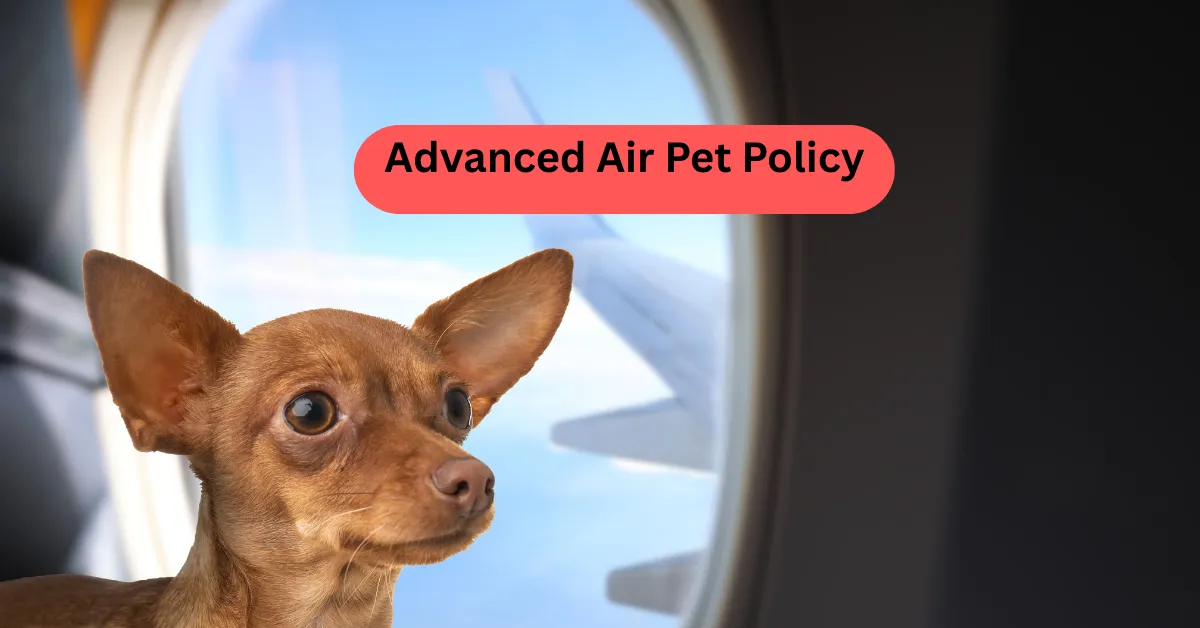
Look, flying private or semi-private isn't always the champagne-and-caviar dream the brochures sell you, especially when you’ve got a shedding, slightly anxious Goldendoodle named Barnaby in tow. But if you’re looking at the Advanced Air Pet Policy, you’re already miles ahead of the nightmare that is commercial cargo. Nobody wants their best friend sitting in a pressurized metal box under a Boeing 737. It’s stressful. It’s loud. It’s just... no.
Advanced Air does things differently. Since they operate out of FBOs (Fixed Base Operators—basically the fancy private terminals where you don't have to take your shoes off for TSA), the vibe is way more relaxed. But "relaxed" doesn't mean "anything goes." You still need a plan. Let’s get into the weeds of how this actually works without the corporate fluff.
The "Can They Fit?" Rule (Size Matters)
First thing's first: space. On a King Air 350 or a PC-12, space is at a premium. We’re talking about sleek, efficient planes, not a flying gymnasium. The Advanced Air Pet Policy is pretty clear—your pet needs to be manageable. If you’re bringing a Great Dane that weighs as much as a small adult human, you’re going to have a logistical puzzle on your hands. Generally, small dogs and cats that can stay in a carrier under the seat or in the designated cabin area are the easiest "yes" you’ll ever get.
But what if they’re big? Well, that’s where the "Advanced Air" difference kicks in. Unlike the big carriers that just say "cargo or bust," these guys might let a larger well-behaved dog sit on the floor, provided they are leashed and you've cleared it beforehand. Don't just show up with a Husky and pray. Call them. Seriously. They actually answer the phone.
The Paperwork: Not Fun, But Necessary
Nobody likes a bureaucrat, but when it comes to flying animals, the FAA has thoughts. You’re going to need your standard health certificate. Most vets know the drill. Usually, it needs to be issued within 10 days of travel. Is it a hassle to schedule a vet visit just for a piece of paper? Yes. Do you have to do it anyway? Also yes. If you’re crossing state lines—especially heading into places with specific agricultural rules—keep that folder handy. Digital is fine, but a physical copy in your bag saves you from the "my phone died" panic at the terminal.
Fees: The Price of Companionship
Let’s talk money. Flying a pet isn't free—usually. The Advanced Air Pet Policy typically involves a pet fee that ranges depending on the route and whether you're on a scheduled shuttle or a full charter. Expect somewhere in the ballpark of $50 to $100 for scheduled flights. Compared to the "we-might-lose-your-luggage" airlines charging $150+ to put your dog in a dungeon, it’s a steal. Honestly, it’s worth it just to see them snoring by your feet instead of wondering if they’re freezing in a cargo hold.
Wait, a quick tangent: if you’re flying a Service Animal, that’s a whole different legal ballgame. Under the DOT rules (which have gotten stricter lately to weed out the people bringing "emotional support peacocks" on planes), legitimate Service Dogs fly for free. But you better have your documentation squared away. Don’t be that person trying to pass off a nippy Chihuahua as a guide dog; it ruins it for everyone.
The Cabin Experience (Or: How Not to Be "That" Passenger)
You’re in a small cabin. Sound travels. Smells... definitely travel. If your dog has a "nervous stomach," maybe skip the heavy breakfast. The Advanced Air Pet Policy assumes your pet is house-trained and non-aggressive. If your cat spends the entire flight from Hawthorne to Mammoth screaming at the top of its lungs, the pilot—and your fellow passengers—will not be amused.
- Pro Tip: Exercise them hard before the flight. A tired dog is a quiet dog.
- Water: Give it sparingly. Altitude does weird things to bladders.
- The Carrier: Make sure it’s leak-proof. Seriously. Just trust this advice.
The "FBO" Advantage
One of the best parts about the Advanced Air Pet Policy is where you board. You aren't trekking through LAX or Phoenix Sky Harbor with a pet crate and three suitcases. You pull up to the FBO, walk into a lounge that looks like a nice hotel lobby, and usually, you’re on the plane within 20 minutes. It reduces the "pre-flight freakout" for the animal by about 90%. No TSA bells, no shouting, no crowds. Just a short walk across the tarmac.
Booking Your Spot
You can’t always just click a button online and add a pet. For the Advanced Air Pet Policy to be properly applied, it’s always better to book through their guest services. Why? Because they limit the number of pets per flight. If three people have already booked with dogs, you might be out of luck for that specific time slot. It’s first-come, first-served. Early birds get the... well, you get the metaphor.
Final Thoughts (Though not a "Conclusion")
Flying with pets is always a bit of a gamble on their behavior, but Advanced Air makes the logistics part of the equation significantly less painful. It’s a boutique experience. You’re paying for the convenience of not treating your pet like luggage. Just remember: bring the leash, bring the treats, and for the love of everything, double-check that health certificate date. Nobody wants to be turned away at the tarmac because of a typo.
Is it perfect? No. Weather happens, mechanicals happen, and sometimes Barnaby decides he hates the sound of turboprops. But in the grand scheme of aviation, the Advanced Air Pet Policy is one of the more humane ways to get from point A to point B with a tail-wagger.
|
|
|
|
|

|

|
|
|




Leave a Reply