

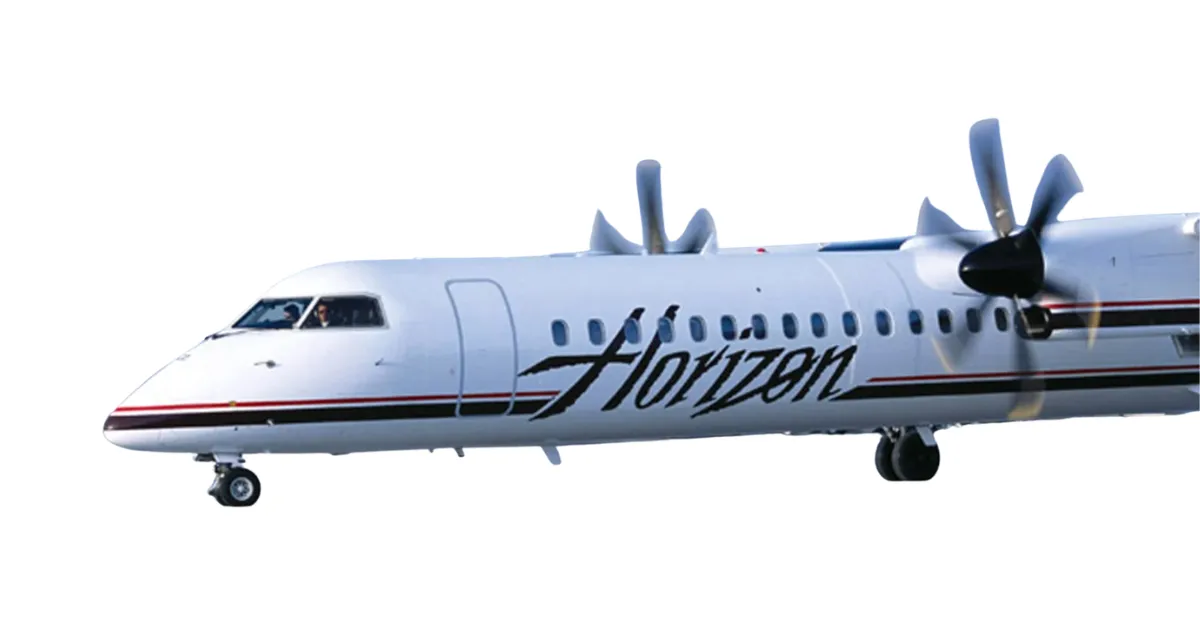
Regional flying in the Pacific Northwest has its own mood—misty mornings, mountain views, quick hops between cities that feel close but not close enough to drive. Horizon Air fits right into that rhythm. Founded in 1981 and headquartered in SeaTac, Washington, Horizon Air operates as a subsidiary of Alaska Air Group under the Alaska Airlines brand.
The airline’s IATA code is QX, and its ICAO airline code is QXE. Flights are marketed as Alaska Airlines flights, but many shorter routes are operated by Horizon crews. It’s a partnership that works quietly in the background, stitching together smaller communities with larger West Coast hubs.
Hub and Operations
Horizon Air primarily operates from major Alaska Airlines hubs including Seattle–Tacoma International Airport and Portland International Airport. Spokane and Boise also see steady regional activity. These airports serve as operational anchors, feeding traffic into Alaska’s broader domestic network.
Schedules are built around frequency. Multiple daily departures on key regional routes. Early flights for business travelers. Evening returns for weekend trips. Short sectors dominate the operation—often under two hours, sometimes barely one.
Destinations and Route Network
The Horizon Air route network focuses on the western United States. Cities across Washington, Oregon, Idaho, California, and Montana are regularly connected. Some routes extend into neighboring states depending on seasonal demand.
This isn’t a coast-to-coast carrier. It’s a connector. Smaller cities link to Seattle or Portland, then onward to bigger destinations. That’s the flow. Reliable, predictable, built around community access rather than flash.
Fleet and Aircraft Details
Horizon Air operates an all-jet fleet composed primarily of Embraer E175 aircraft. These regional jets are configured to carry approximately 76 passengers. Compared to older regional aircraft, the E175 feels roomier, with larger overhead bins and a more modern cabin layout.
The 2-2 seating configuration eliminates middle seats entirely. A small mercy. The aircraft are designed for efficiency on short to mid-range routes while maintaining passenger comfort that doesn’t feel cramped or squeezed.
Cabin Classes
Economy Class
Economy Class makes up the majority of seating onboard Horizon Air’s E175 aircraft. Seats are arranged in a 2-2 layout, offering reasonable legroom for regional travel. Windows feel properly sized, overhead bins handle standard carry-ons without too much drama.
Complimentary snacks and beverages are offered on most flights, aligned with Alaska Airlines service standards. Service is quick but friendly. No elaborate presentation—just steady, consistent care.
Premium Economy
Premium Class seating is available on Horizon-operated flights under the Alaska Airlines brand. These seats offer extra legroom near the front of the Economy cabin. Priority boarding is typically included.
It’s not a separate cabin with curtains or walls, just a more spacious section. On flights pushing two hours, the difference in comfort is noticeable. Knees appreciate it.
Business Class (First Class)
Horizon Air’s Embraer E175 aircraft include a First Class cabin at the front. Seats are wider with additional legroom, arranged in a 1-2 configuration. This cabin provides a quieter feel and upgraded in-flight service.
Complimentary premium beverages and enhanced snack offerings are typically available. On select routes, meal service may be offered depending on flight length and time of day. For a regional jet, it feels surprisingly polished—compact yet thoughtfully arranged.
Flight Experience
Boarding tends to move quickly. Smaller aircraft mean fewer passengers and faster turnarounds. Alaska Airlines’ boarding process applies, with group numbers and priority access for elite members.
Turbulence can be more noticeable compared to larger aircraft. That’s common with regional jets, especially over mountainous terrain in the Northwest. Pilots handle it professionally, and flights are generally punctual.
Wi-Fi is available on most Horizon Air flights, allowing passengers to stream entertainment to personal devices. Alaska’s streaming library is accessible onboard, though seatback screens are not installed. Bring headphones. Download something ahead of time—just in case.
Online Services
Since Horizon Air operates under the Alaska Airlines brand, all booking and passenger services are handled through Alaska Airlines’ website and mobile app. Online check-in opens 24 hours before departure.
Passengers can manage reservations, select seats, purchase upgrades, track baggage, and receive real-time flight alerts digitally. The system is intuitive and reliable. Travel plans change—weather, connections, delays—and the app keeps updates flowing without confusion.
Official Website
For corporate information, career opportunities, and company background, the official Horizon Air website is:
https://www.horizonair.com
Passenger reservations and ticketing are managed through Alaska Airlines’ official website due to the brand partnership.
Policies and Travel Notes
Baggage policies follow Alaska Airlines guidelines. Standard carry-on allowances apply, and the Embraer E175 aircraft can accommodate most roller bags in overhead bins without mandatory gate-checking—something frequent travelers quietly appreciate.
Frequent flyer benefits are honored through the Alaska Airlines Mileage Plan program. Elite members receive priority boarding and potential upgrade access depending on availability.
Weather in the Pacific Northwest can create occasional delays—fog, rain, winter systems drifting through mountain passes. Regional networks feel those effects more sharply. Flexible scheduling helps. A little patience helps more.




Leave a Reply