

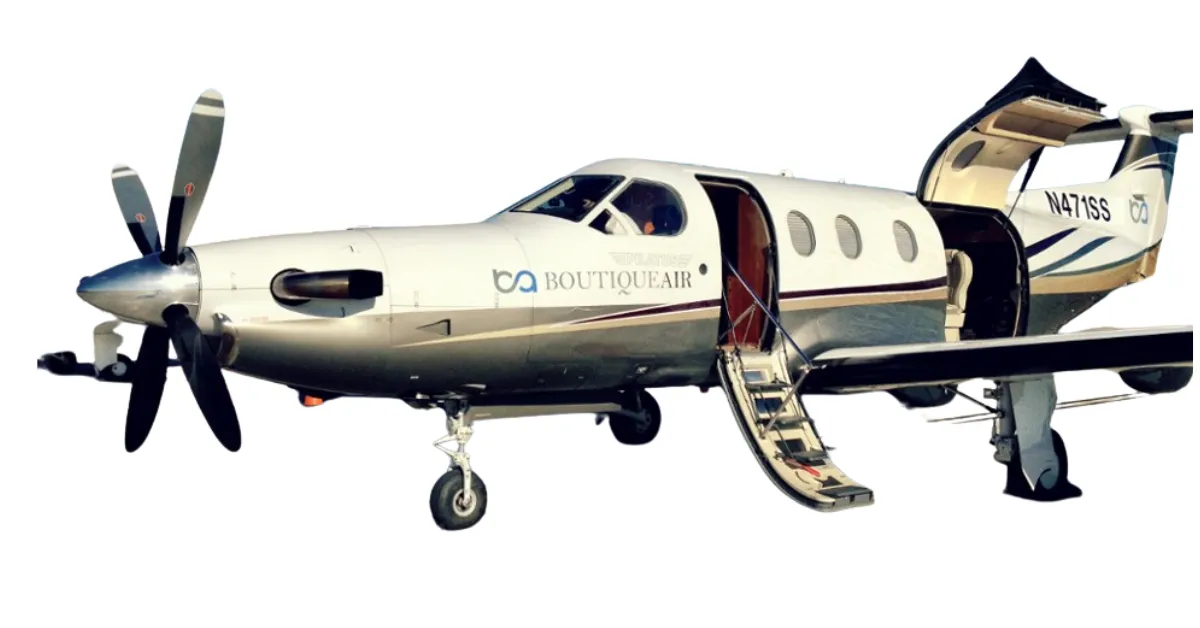
Regional flying can feel like a throwback sometimes—small planes, quick boarding, no chaotic terminal marathons. That’s exactly where Boutique Air fits in. Founded in 2007 and based in the United States, Boutique Air focuses on connecting smaller communities to larger hub airports. It operates under the Essential Air Service (EAS) program, which keeps air travel alive in towns that might otherwise lose commercial flights.
The airline’s IATA code is 4B, and its ICAO airline code is BTQ. Operations are designed to be simple and practical. No oversized branding. No dramatic marketing stunts. Just regional routes, tight schedules, and aircraft that feel closer to private aviation than typical commercial jets.
Hubs and Operations
Boutique Air’s primary operational bases include Denver International Airport (DEN), Phoenix Sky Harbor International Airport (PHX), and Dallas/Fort Worth International Airport (DFW). These airports act as connection points where passengers from smaller cities can transfer to major airlines for onward travel.
Flights are typically short-haul—often under two hours. Turnaround times are quick. Ground procedures are refreshingly straightforward. In some smaller airports, check-in can take just minutes, and security lines? Practically nonexistent compared to major metro hubs.
Cabin Classes
Boutique Air does not follow the traditional three-cabin model seen on larger airlines. There is no separate premium economy or business class cabin in the conventional sense. Instead, the experience is built around a single-class layout that feels more intimate.
With aircraft seating usually between 8 and 30 passengers depending on the model, every seat feels closer to first-class spacing than standard economy on big carriers. It’s one cabin, but not one-size-fits-all comfort.
Economy Experience
Economy on Boutique Air is… different. The aircraft—often Pilatus PC-12 turboprops or similar regional types—feature spacious leather seats. No cramped middle seats on the smaller planes. Boarding is fast, almost casual. Sometimes it feels more like stepping onto a charter flight than a commercial one.
There’s no elaborate inflight entertainment system. No seatback screens glowing in the dark. Flights are short enough that most passengers simply look out the window or scroll through downloaded content. And honestly? On a 60-minute hop, that works.
Premium Economy and Business Class
Traditional premium economy and business class cabins are not part of Boutique Air’s structure. However, the small aircraft layout naturally delivers extra personal space. Seats are wide, legroom is generous, and boarding feels relaxed rather than rushed.
Some travelers even describe it as a semi-private experience—quiet cabin, limited passengers, direct interaction with crew. It lacks the champagne-and-lounge theatrics, but comfort is definitely present.
Destination and Route Network
Boutique Air serves smaller cities across the United States, connecting them to larger airline hubs. Destinations have included communities in states such as Colorado, New Mexico, Texas, Arizona, and Utah. Routes often link rural airports to DEN, PHX, or DFW for broader network access.
Schedules can shift based on government contracts and regional demand, so routes may evolve over time. That’s the nature of Essential Air Service operations—flexible, practical, sometimes reshuffled. Travelers in smaller markets rely on it heavily.
Fleet and Aircraft Details
Boutique Air’s fleet primarily includes the Pilatus PC-12, a single-engine turboprop known for reliability and short runway performance. Some operations have also used regional jets through partnerships in the past, but the PC-12 remains central to its identity.
The PC-12 typically seats around 8 passengers in Boutique configuration. It’s pressurized, modern, and designed for efficiency. These aircraft are well-suited for short regional routes and smaller airport infrastructure where larger jets simply wouldn’t make sense.
Flight Experience
The vibe onboard is calm. No long boarding groups. No overhead bin wrestling matches. Because of the smaller aircraft size, passengers often check larger carry-on bags planeside. It’s a quick handoff—tag it, board, retrieve it after landing.
Cabin crew service is straightforward and friendly. On very short routes, beverage service may be limited or unavailable. Weather can feel more noticeable in turboprops compared to larger jets, especially in windy regions—some travelers notice the bumps, others barely blink.
Policies and Travel Information
Ticket policies vary depending on fare type and booking channel. Boutique Air typically offers standard fare categories with different flexibility options. Changes and cancellations may involve fees unless refundable fares are selected.
Baggage allowances are modest due to aircraft size limitations. Weight restrictions are taken seriously—small aircraft demand it. Passengers are advised to review baggage guidelines carefully before arriving at the airport. Oversized items may not be accommodated.
Online Services
Boutique Air provides online booking through its official website. Travelers can search routes, manage reservations, check flight status, and review policies directly online. Mobile functionality is straightforward, though not overloaded with extra features.
Online check-in availability may vary depending on airport and route. In many small markets, airport check-in remains quick and simple enough that digital boarding passes aren’t always essential.
Official Website
The official website for Boutique Air is:
https://www.boutiqueair.com
The site includes route maps, baggage policies, contact details, and Essential Air Service updates. It’s functional, not flashy—just clear information where it needs to be.




Leave a Reply