

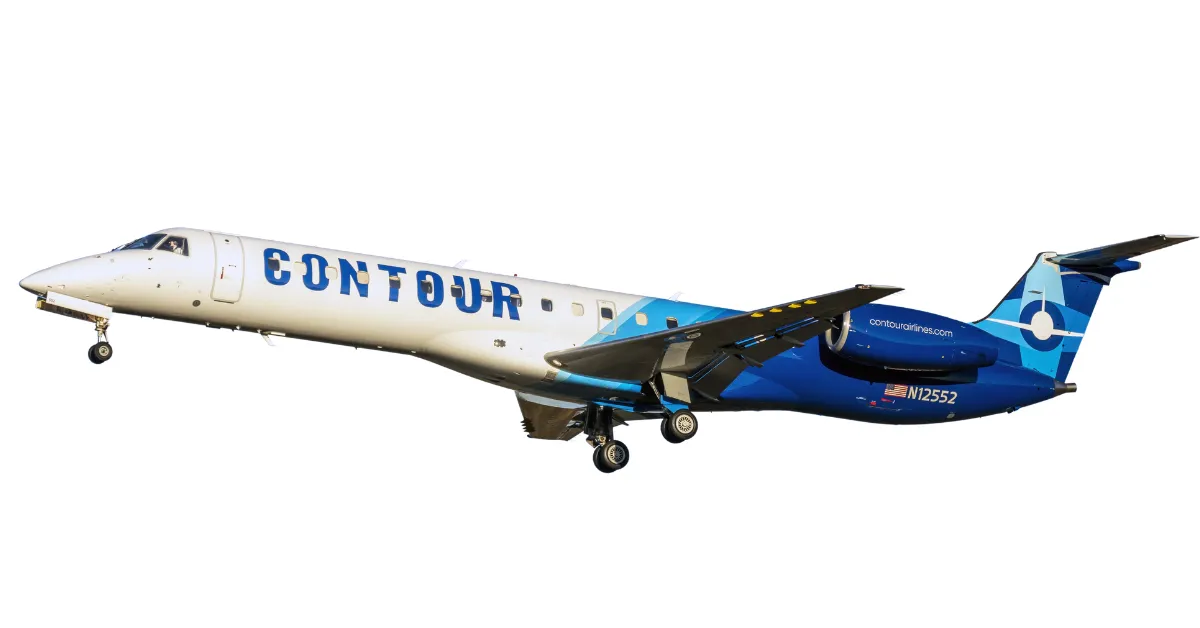
Small airports. Quiet gates. The kind where boarding announcements sound almost personal. That’s the environment where Contour Airlines quietly operates—regional routes, shorter hops, and schedules built for travelers who just need reliable connections without the big-airport chaos.
Overview
Contour Airlines is a U.S. regional carrier headquartered in Smyrna, Tennessee. Founded in 1982 as part of Contour Aviation, the airline focuses on scheduled regional passenger flights along with charter operations. Its IATA code is LF, while the ICAO airline code is VTE. Those codes pop up in reservation systems, airport displays, and airline logistics—tiny details, big operational meaning.
The airline’s mission is simple: connect underserved cities to larger hubs where travelers can continue onward journeys. Not glamorous. Very practical. And honestly, for many smaller communities, these flights are the only convenient link to the national air network.
Hubs and Operations
Contour Airlines operates a distributed regional model instead of relying on a single mega-hub. Focus cities and operational bases often include airports such as Nashville, Charlotte, and Philadelphia, depending on government-supported Essential Air Service (EAS) routes and commercial partnerships.
Schedules often revolve around commuter-friendly timing—early departures, late afternoon returns, quick aircraft turnaround on the ground. Regional aviation runs on precision; even a short delay can ripple through several connecting flights later in the day.
Cabin Classes
Unlike many small regional carriers, Contour Airlines offers a premium-style single-class configuration designed to feel closer to business class seating rather than traditional regional economy. No complicated cabin segmentation. Just one upgraded seating layout.
Economy Class
Traditional economy seating is not the primary layout on most scheduled Contour flights. Instead, aircraft are configured with spacious seating—fewer seats overall, wider spacing, and additional legroom. Passengers essentially receive a premium economy–like experience even on short regional sectors.
Premium Economy
The airline does not operate a separately branded Premium Economy section. The single-cabin layout effectively blends standard and premium comfort elements, offering wider seats and greater pitch than many regional competitors. For travelers accustomed to tight 50-seat regional jets, the difference feels noticeable right away.
Business Class
A dedicated Business Class cabin is not marketed as a separate category. Still, the seating arrangement resembles what many travelers would consider regional business class—larger seats, quieter cabin environment, and lower passenger density. Labels vary; comfort is what matters.
Destination and Route Network
Contour Airlines serves a network primarily across the United States, connecting smaller cities to larger transportation centers. Routes often operate under the U.S. Essential Air Service program, ensuring communities maintain commercial air connectivity even when passenger volumes are modest.
Destinations shift occasionally as government contracts rotate and new routes open. Cities in the Midwest, South, and Mountain regions frequently appear on the schedule. The network is selective rather than sprawling—precision instead of scale.
Fleet and Aircraft Details
The Contour Airlines fleet includes Embraer ERJ-135 and ERJ-140 regional jets, typically configured with approximately 30 seats in an all-premium layout. These aircraft are designed for short-to-midrange routes, offering efficient performance at smaller regional airports.
Cabins feel less crowded compared with traditional 50-seat regional jets. Overhead storage remains limited—regional aircraft reality—but boarding tends to be faster, deplaning quicker, and turnaround times shorter. A practical rhythm.
Flight Experience
The onboard experience leans toward simplicity and comfort rather than elaborate service layers. Complimentary snacks and beverages are often provided on scheduled flights. Cabin crews operate in smaller teams, creating a more relaxed interaction style—less rushed, more conversational, sometimes even a bit neighborly.
Inflight entertainment systems are not typically installed, and Wi-Fi availability varies by aircraft. Short flight durations make this less of a pain point, though downloading entertainment before departure is always the safe move. Been there—blank phone battery at 30,000 feet is never fun.
Online Services and Booking
Contour Airlines offers online booking through its official website, along with standard passenger services including:
- Online flight reservations
- Check-in management
- Flight schedule updates
- Charter service inquiries
- Customer support access
Baggage policies, ticket modifications, and schedule changes are outlined clearly during booking. Regional airlines sometimes surprise travelers with varying rules—reading the fare details carefully saves headaches later.
Official Website
The official Contour Airlines website is:
https://www.contourairlines.com
The website provides booking tools, route maps, travel policies, and company updates. Charter aviation services are also listed for corporate and private travel needs.
Operational Snapshot
Regional aviation often operates behind the curtain—no dramatic headlines, no luxury marketing campaigns, just aircraft moving passengers where larger airlines rarely fly. Contour Airlines fills that gap quietly, linking smaller communities to broader travel networks while offering a seating experience that feels slightly more comfortable than the typical regional expectation. Short flights, small cabins, practical comfort. That rhythm defines the airline’s day-to-day operations.




Leave a Reply