

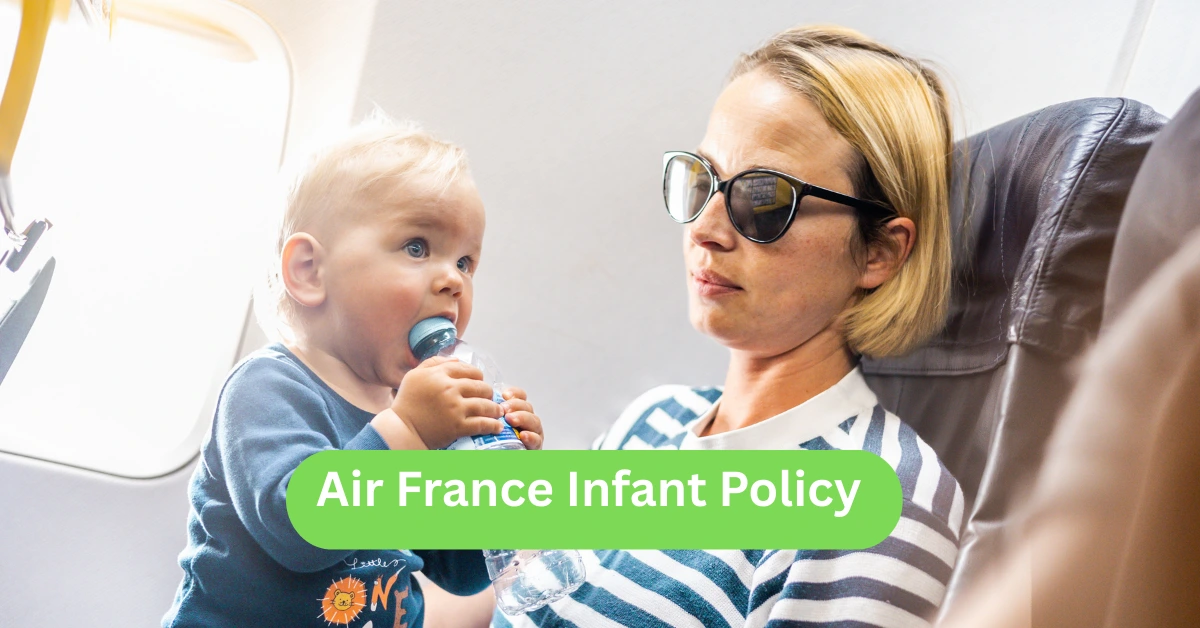
Flying with a baby changes everything. Your packing list doubles, your patience gets tested, and suddenly airline rules matter a lot more than before. If you’re planning to travel with Air France and an infant, understanding the Air France Infant Policy ahead of time can make the whole experience smoother and far less stressful.
Air France is generally family-friendly, but like most international airlines, it has specific rules for infant age limits, fees, seating, bassinets, and baggage. Some of these details aren’t obvious during booking, which is why it helps to know what to expect before you reach the airport.
This guide breaks it all down in simple, human language, without technical fluff.
Who Is Considered an Infant on Air France?
Under the Air France Infant Policy, an infant is defined as:
-
A child from 7 days old
-
Up to 23 months on the date of travel
Once a child turns two years old, even if it’s during the trip, they must travel on a child ticket and have their own seat. Air France follows this rule strictly, especially on international routes.
Minimum Age for Infants to Fly
Air France allows newborns to fly once they are at least 7 days old. Babies younger than this are usually not accepted unless there’s a medical necessity and prior airline approval.
Parents traveling with very young infants are encouraged to consult a doctor before flying, particularly for long-haul journeys.
Infant Ticket Options on Air France
The Air France Infant Policy gives parents two main ways to travel with an infant.
Infant on Lap (Infant-in-Arms)
-
Infant sits on an adult’s lap
-
No separate seat provided
-
One lap infant per adult passenger
This option is popular for short flights and helps reduce ticket costs.
Infant with a Separate Seat
-
Infant occupies their own seat
-
Child fare applies
-
Approved car seat required
Many parents prefer this option on long flights for comfort and safety.
How Much Does an Infant Ticket Cost on Air France?
Infant travel isn’t free, but it’s cheaper than adult tickets.
Domestic and Short-Haul Flights
-
Infant fare is usually a small fixed amount
-
Taxes may apply
-
Price varies by route
International Flights
-
Infant fare is typically around 10% of the adult base fare
-
Taxes and surcharges are added
-
Cost varies depending on destination
Under the Air France Infant Policy, infant tickets must be added during booking or before departure.
Seating Rules for Infants on Air France
Seating plays a big role in comfort when traveling with a baby.
Key seating rules include:
-
Infants cannot sit in exit rows
-
Bassinet seats are limited and aircraft-specific
-
Lap infants must be held during takeoff and landing
If seating comfort matters to you, early seat selection is strongly recommended.
Bassinet Availability and Rules
Bassinets can make a huge difference on long flights.
Under the Air France Infant Policy:
-
Bassinets are available on select long-haul aircraft
-
They are usually located in bulkhead rows
-
Infant size and weight limits apply
-
Availability is limited and not guaranteed
You should request a bassinet as early as possible, ideally right after booking.
Using a Car Seat Onboard
If you book a seat for your infant:
-
The car seat must be airline-approved
-
It must fit within Air France seat dimensions
-
Cabin crew may verify safety certification
This option offers better support, especially on long journeys.
Infant Baggage Allowance on Air France
One helpful part of the Air France Infant Policy is the baggage allowance.
Infants are generally allowed:
-
One checked baggage item (weight depends on route)
-
One collapsible stroller or pram
-
Baby essentials carried onboard
Baggage rules may vary slightly by fare type and destination.
Carry-On Items for Infants
Parents traveling with infants can bring essential items onboard, including:
-
Baby food and formula
-
Feeding bottles
-
Diapers and wipes
-
Baby medicines
Liquids for infant use are usually allowed beyond standard limits but may be screened at security.
Baby Food and Feeding Support During the Flight
Air France does not always provide infant meals.
Parents are advised to:
-
Carry enough baby food and milk
-
Prepare for delays
-
Ask cabin crew for assistance with warming bottles (when permitted)
Cabin crew are usually supportive but limited by safety rules.
Traveling with Infants on Domestic and Short-Haul Flights
Short flights are generally easier with infants.
On domestic and short-haul routes:
-
Infant fees are lower
-
Bassinet availability is limited
-
Lap infant travel is common
These flights are a good option for first-time infant travelers.
Traveling with Infants on Long-Haul Flights
Long-haul travel requires extra planning.
Under the Air France Infant Policy for international flights:
-
Passport is mandatory
-
Visa may be required depending on destination
-
Bassinet requests are more common
-
Infant fares are higher
Comfort, feeding schedules, and sleep arrangements become more important.
Required Documents for Infant Travel
Parents should carry:
-
Infant passport (mandatory for international travel)
-
Birth certificate (recommended)
-
Visa documents (if applicable)
-
Vaccination records (optional but useful)
Document checks are strict, especially for international travel.
Health and Medical Considerations
Air France recommends:
-
Avoiding travel with sick infants
-
Carrying prescribed medications
-
Informing crew of any medical needs
Infants with special medical conditions may require medical clearance before flying.
Adding an Infant After Booking
If you didn’t add the infant during booking:
-
You can add the infant later
-
Contact Air France customer support
-
Additional charges may apply
Under the Air France Infant Policy, infants cannot simply be added at the airport without prior arrangements.
Changes and Cancellations for Infant Tickets
Infant tickets usually follow the adult ticket rules.
This means:
-
If the adult ticket is refundable, the infant ticket may be refunded
-
Change fees may apply
-
Infant booking must be modified with the adult reservation
Fare rules always take priority.
Traveling Alone with an Infant
Solo parents can travel with infants, but:
-
Only one lap infant is allowed per adult
-
Extra assistance should be requested in advance
-
Carrying essentials is crucial
Air France staff usually assist when informed ahead of time.
Common Mistakes Parents Make
Many issues are avoidable.
Common mistakes include:
-
Forgetting to add the infant during booking
-
Assuming infant travel is free
-
Not requesting bassinets early
-
Carrying incomplete documents
Understanding the Air France Infant Policy prevents last-minute stress.
Practical Tips for a Smoother Journey
A few real-world tips help:
-
Choose bulkhead seats if possible
-
Feed during takeoff and landing
-
Pack extra diapers and clothes
-
Arrive early at the airport
Little things matter when traveling with a baby.
Final Thoughts on Air France Infant Policy
The Air France Infant Policy is designed to balance safety, comfort, and practicality for families traveling with babies. While the rules are clear, the experience becomes much easier when parents plan ahead, understand fees, and prepare for seating and baggage needs.
Flying with an infant isn’t always easy, but with the right preparation, Air France can be a comfortable and reliable choice for family travel.

|

|
|

|

|

|

|

|
|



Leave a Reply