

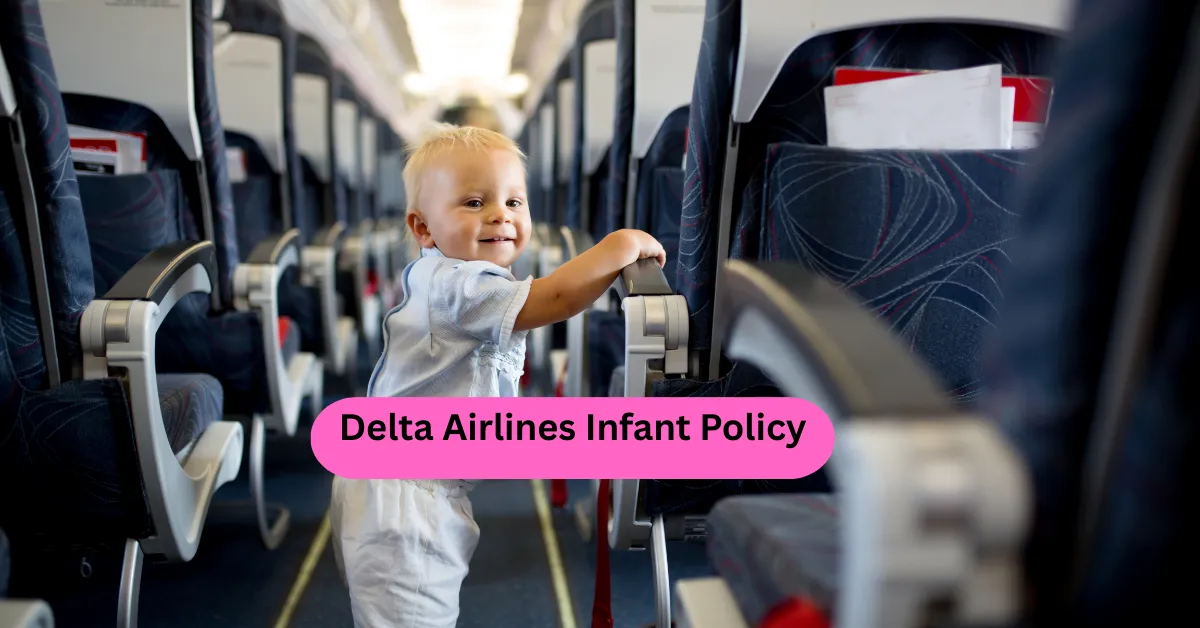
Traveling with a baby brings a lot of questions. One of the biggest is how airlines treat infants on flights. This guide covers the Delta Airlines Infant Policy for anyone planning to fly with a baby under age two. It spells out how fees work, what you need to prepare, and how to get through your journey with less stress.
Who Counts as an Infant on Delta Airlines?
Delta defines an infant as a child under 2 years old (before their second birthday). Babies that are younger than this can be carried on an adult’s lap for the flight. Once a child is 2 years old or older, they’re no longer considered an infant and need their own seat with a ticket.
There’s a special note for newborns: very young babies, especially under a week old, may require a doctor’s note before they’re allowed to fly at all. That part isn’t always clearly spelled out on general fare pages, but most families find it’s a rule worth checking on with Delta or a doctor before booking.
Lap Infants: Flying on a Parent or Guardian’s Lap
A core piece of the Delta Airlines Infant Policy is the concept of the lap infant, also called “Infant‑in‑Arms.” This means the baby doesn’t have a seat of their own but stays on an adult’s lap for the duration of the flight.
Here’s how that works:
-
On domestic U.S. flights, infants under 2 can ride on a parent’s or guardian’s lap for no extra fare.
-
On international flights, lap infants usually need a ticket and typically pay about 10% of the adult fare plus taxes and fees, even if they remain in your lap.
-
You must notify Delta that an infant will be flying with you when you book, or add them in “Manage My Trips” so it’s on the ticket. Without that, Delta may not have the infant listed, which can cause issues at check‑in.
A simple rule: only one lap infant per fare‑paying adult. If more than one baby is traveling with a single adult, you’ll need to buy a separate seat for the extra child.
Why Having a Seat for the Infant Matters
While it’s totally normal to have a lap infant, many families choose to buy a seat for safety and comfort. In that case, the seat must be used with an FAA‑approved child safety restraint (car seat). Delta allows these on board if:
-
The car seat is approved for aircraft use
-
It fits in the aircraft seat
-
It’s installed in the correct position (usually a window seat)
These seats give both baby and adult more space and peace of mind during takeoff, landing, and turbulence. They also let the child travel more independently and comfortably on longer flights.
Fees and Ticketing Details
Even though infants on laps don’t pay a standard fare on domestic flights, here are some realities about cost:
-
Domestic flights: Lap infants are free of charge, but you still need to add them to your reservation so they’re officially counted.
-
International flights: Lap infant fares are normally charged at a reduced rate (around 10% of the adult fare + taxes/fees). That fee isn’t always obvious when booking online, so families are often advised to call Delta reservations to confirm.
-
If an infant turns 2 during the journey, a full fare seat must be purchased for the portions when they are age 2 or older.
-
A ticket is required even for lap infants on all flights; on U.S. domestic flights it may be a “zero value ticket” but it must exist in the system.
That last point is important because the ticket isn’t a “payment” so much as a way for Delta to count passengers and ensure safety and weight balance considerations are handled.
Baggage and Carry‑On Rules for Infants
The Delta Airlines Infant Policy also covers what you can bring along with a baby:
-
Strollers and car seats can be checked for free, whether or not the infant is ticketed. These don’t count against your normal baggage allowance.
-
You’re usually allowed to bring items like a diaper bag or booster seat in addition to your normal carry‑on allowance.
-
If the infant is a lap child, they don’t get their own baggage allowance, so anything you pack for them counts toward the adult’s allowance.
These policies help make it easier to travel with all the gear a baby needs, from bottles to blankets.
Seating and Safety Requirements
Delta’s rules about where infants can sit and how they must be secured are grounded in FAA safety requirements:
-
When using a child safety seat, that seat shouldn’t be in an aisle or emergency exit row, and it must be installed according to the manufacturer’s instructions.
-
During takeoff and landing, infants should either be held by an adult or secured in an FAA‑approved child restraint.
-
Booster seats aren’t allowed for infants or toddlers during critical phases of flight (takeoff/landing/taxi) because they don’t provide the protection of a full child restraint system.
Flight attendants will usually check to make sure restraints are properly installed, and airline staff will help whenever possible.
Booking Tips and Practical Advice
Flying with a baby can be a juggling act. Here’s some practical info many families find useful:
-
If booking online doesn’t give you a clear “add infant” option, you can call Delta reservations or add the infant later in “Manage My Trips.”
-
Always bring proof of age (birth certificate or passport) in case TSA or Delta staff ask about the infant’s age. Many families recommend having it ready at check‑in.
-
Arrive at the airport early when traveling with infants, especially on international flights, so there’s ample time to deal with paperwork and seating arrangements.
These simple habits make going through security and boarding smoother.
End‑to‑End Summary
The Delta Airlines Infant Policy is designed to make traveling with infants as manageable as possible. Domestic lap infants come free, but you must add them to your ticket. International travel usually means a reduced fare for infants even if they sit on a lap. You can also buy a seat and bring a safety seat for more comfort and security.
Travelers should plan ahead, understand fee rules, and make sure the infant is listed on the itinerary. Following these guidelines helps keep the trip calm and keeps paperwork and surprises at bay.




Leave a Reply