

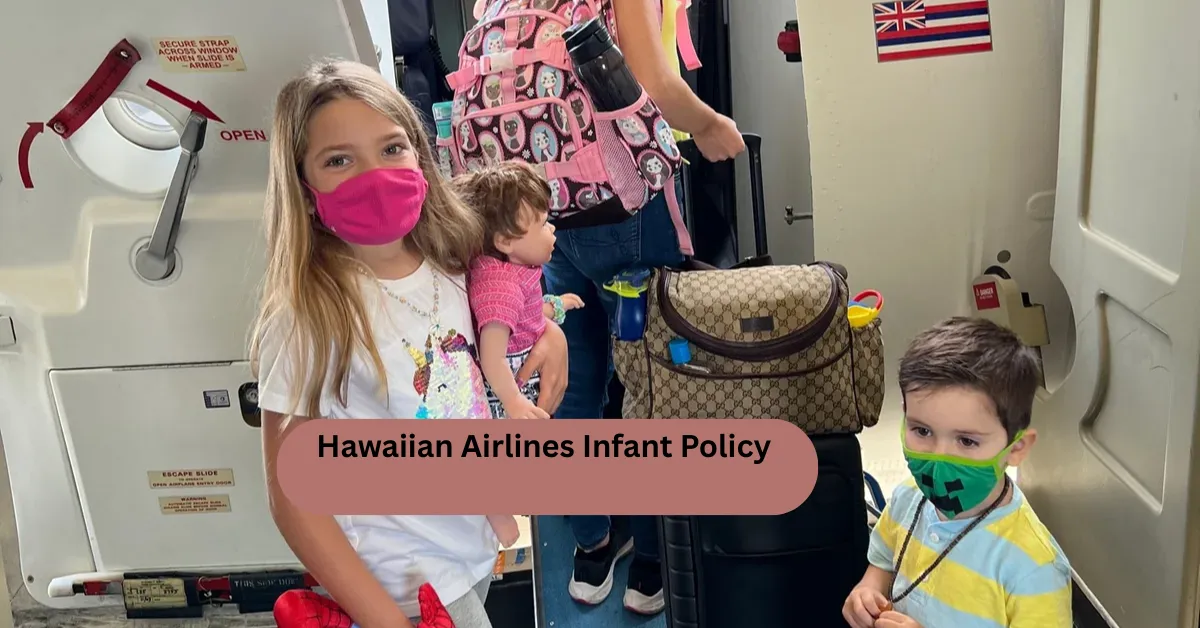
When you're planning a trip to the islands, the last thing you want to stress about is whether or not your little one is cleared for takeoff. Traveling with an infant is a feat of logistics, involving everything from diaper bags to collapsible strollers. Understanding the Hawaiian Airlines Infant Policy ahead of time can be the difference between a smooth boarding process and a frantic scramble at the check-in counter.
Hawaiian Airlines is generally very family-friendly, but they have specific rules regarding age limits, seating, and baggage that differ depending on whether you are flying between the islands or heading across the Pacific.
Age Limits and General Requirements
First things first: what counts as an "infant"? For Hawaiian Airlines, an infant is any child under the age of two (24 months).
-
Minimum Age: There isn't a strict "minimum age" like some international carriers have, but if your baby is less than seven days old, you'll need to provide a physician’s statement confirming they are fit to fly.
-
Turning Two Mid-Trip: This is a common "gotcha." If your child celebrates their second birthday during your trip, the FAA requires them to have their own purchased seat for the return flight. You can't keep them on your lap once they hit that two-year milestone.
-
Proof of Age: It is a very good idea to carry a copy of your child’s birth certificate. While you might not be asked for it on every domestic flight, the airline reserves the right to request proof of age—especially if your toddler is tall for their age and looks like they might be over two.
Lap Infants vs. Ticketed Seats
You have two main choices when booking: the "Lap Child" route or buying a separate seat.
The Lap Infant Option
If your child is under two, they can fly as a lap infant. This means they don't get their own seat and must sit on the lap of an adult (who must be at least 18 years old, or 16 for certain international routes like American Samoa).
-
Inter-island and North America: On flights within Hawaii or between Hawaii and the US Mainland, lap infants fly for free. You still need to "book" them, though.
-
International Routes: For international destinations (like Japan, Korea, or Australia), lap infants are typically charged 10% of the adult fare plus taxes and fees.
-
One Per Adult: Only one lap infant is allowed per ticketed adult. If you are traveling alone with twins, you will have to buy a seat for at least one of them.
Purchasing a Separate Seat
The FAA and most safety experts recommend that infants have their own seat and be secured in an approved car seat. If you choose this:
-
You will pay the applicable fare (sometimes discounted for international, but often full price for domestic).
-
The child must be in an FAA-approved child restraint system (car seat).
-
On international flights, children with their own seats are often charged about 75% of the adult fare.
Adding an Infant to Your Reservation
One quirk of the Hawaiian Airlines Infant Policy is that you often cannot add a lap infant to your booking online if you’ve already bought your ticket.
If you are booking a new flight, look for the option to add an "Infant on Lap" during the initial passenger selection. If you’ve already booked, you’ll likely need to call Hawaiian Airlines Reservations (1-800-367-5320) to have the infant added to your PNR (Passenger Name Record). This ensures their name is on the manifest and that you are seated in a row that has enough extra oxygen masks.
Baggage and Gear: Strollers and Car Seats
Packing for a baby feels like moving a small house. Fortunately, Hawaiian Airlines is relatively generous with baby gear.
Check-in Items
You can check a stroller and a car seat free of charge. This does not count toward your standard checked bag allowance. You can do this at the ticket counter when you first arrive at the airport, or you can "gate check" them.
-
Gate Checking: This is usually the best move. You keep your stroller through security and all the way to the plane door. When you land, the stroller will be waiting for you right there on the jet bridge.
-
Large Strollers: If you have a massive, non-collapsible jogging stroller or something weighing over 50 lbs, the airline may require you to check it at the ticket counter rather than the gate.
Carry-on Allowance
If you are flying with a lap infant, they do not get their own carry-on allowance. However, the adult is usually allowed to bring a diaper bag in addition to their own personal item and carry-on bag. If you have purchased a separate seat for your infant, they get the full baggage allowance associated with that ticket.
In-Flight Comfort: Bassinets and Seating
If you’re on a long-haul flight from the mainland or internationally, you might be wondering about bassinets.
-
Availability: Bassinets are available on most international flights and some long-haul domestic routes (like New York or Boston) operated by the Airbus A330.
-
The Catch: You generally have to be sitting in a bulkhead row to use one. Since these seats often come with an "Extra Comfort" upcharge, you may have to pay for the seat upgrade to get the bassinet.
-
Weight Limit: Most Hawaiian Airlines bassinets are for babies weighing under 20 lbs. It is best to call and reserve these well in advance, as they are first-come, first-served.
Seating Restrictions
Because of oxygen mask configurations, you can only have one lap infant per row section (the group of seats between the aisles). If a family is traveling with two lap infants, they will be seated across the aisle from each other rather than side-by-side. Also, for safety reasons, passengers with infants cannot sit in exit rows.
Final Tips for a Smooth Flight
-
Milk and Formula: You are allowed to bring more than 3.4 ounces of breast milk, formula, or juice through TSA, but you must declare it at the security checkpoint. It will likely undergo extra screening.
-
Changing Tables: Most (but not all) Hawaiian Airlines aircraft have at least one lavatory equipped with a fold-down changing table. Ask a flight attendant early so you know which bathroom to head to.
-
Pressure Relief: During takeoff and landing, the change in cabin pressure can hurt a baby’s ears. Encouraging them to bottle-feed, breastfeed, or use a pacifier during these times helps them swallow and equalize the pressure.
Traveling with an infant is always an adventure, but knowing the rules before you reach the gate helps you focus on the vacation instead of the paperwork.



Leave a Reply