

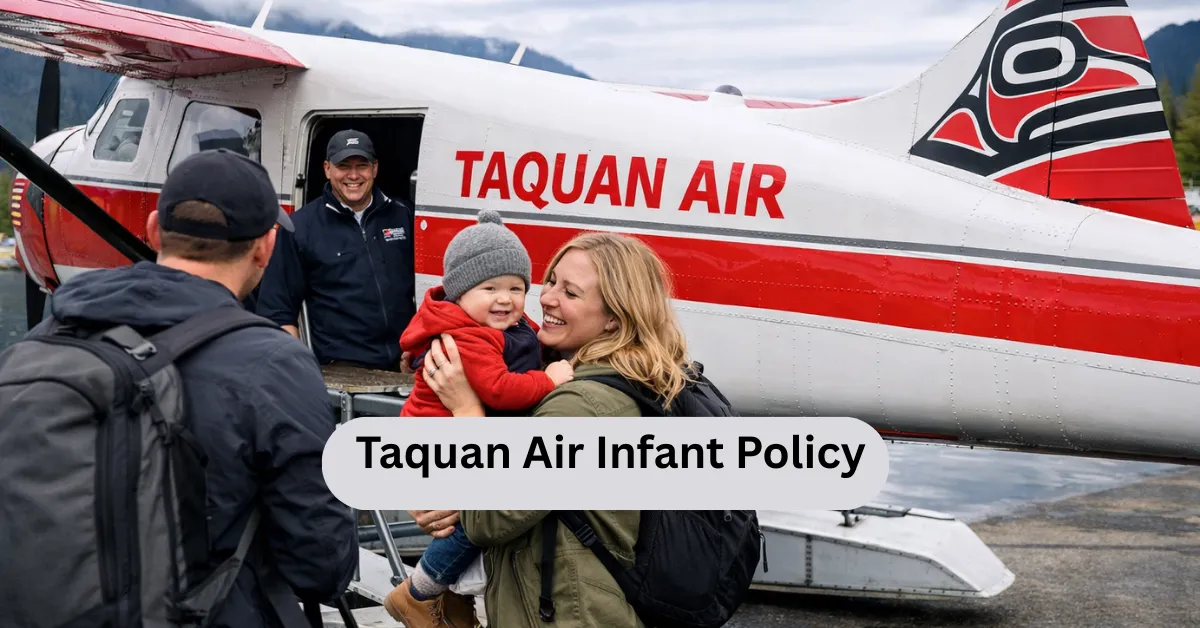
Flying over the glaciers and fjords of Southeast Alaska is a bucket-list experience, but doing it with a tiny human in tow adds a whole new layer of planning. If you are headed to Ketchikan and looking to hop on a floatplane with your little one, understanding the Taquan Air Infant Policy is the first step toward a smooth flight.
Unlike large commercial airlines, bush flying involves smaller aircraft and very specific weight and balance requirements. Here is everything you need to know about flying with babies on Taquan Air, from lap seating rules to what you can bring on board.
Defining "Infant" and Lap Child Rules
In the world of aviation, age dictates the rules. According to the Taquan Air Infant Policy, an infant is defined as any child under two (2) years of age.
Flying as a Lap Child
The most common way to travel with a baby on a short commuter flight or flightseeing tour is as a "lap child."
-
The Cost: One infant under the age of two may fly on an adult's lap at no additional charge. This applies to passengers paying the full adult fare.
-
Safety Requirements: Only one lap child is permitted per adult passenger. This is a safety regulation to ensure that in the event of an emergency, every infant has a dedicated adult to assist them.
-
Age Verification: While it’s rare to be asked for a birth certificate on a small regional flight, it is always a good idea to have a digital copy or a photo of your baby’s ID on your phone, just in case there is a question about their age.
Purchasing a Seat for Your Baby
While many parents opt for the free lap child route, you also have the option to purchase a dedicated seat for your infant.
Why Buy a Seat?
If you are flying on a longer scheduled route or if you simply want the extra space to keep your baby in an FAA-approved car seat, buying a seat is the way to go.
-
Comfort: Floatplanes like the Dehavilland Beaver or Otter have cozy cabins. Having a dedicated seat allows you to use a car seat, which can be much more comfortable for a sleeping baby than being held for 45 minutes.
-
Safety: The FAA recommends that all children travel in a government-approved child restraint system (CRS).
Car Seat Requirements
If you purchase a seat, you must bring your own FAA-approved car seat.
-
Look for the sticker that says: "This restraint is certified for use in motor vehicles and aircraft."
-
Because floatplane seats can be narrower than standard jet seats, it is worth calling the Taquan Air reservation desk at 907-225-8800 to confirm the dimensions of the aircraft assigned to your flight.
Strollers and Baby Gear
Navigating the docks in Ketchikan with a stroller can be a bit of a workout, but Taquan Air is generally very accommodating with baby gear.
Gate Checking Strollers
Since there isn't an "overhead bin" in a floatplane, large items like strollers cannot stay in the cabin with you.
-
Check-in: You can use your stroller right up until you reach the plane. At that point, the ground crew will take it and load it into the aircraft's baggage compartment.
-
Folding Strollers: It is highly recommended to bring a collapsible or umbrella-style stroller. Space is at a premium in small bush planes, and massive "all-terrain" strollers can be difficult to fit into the cargo hold of a smaller aircraft.
Diaper Bags and Essentials
Your diaper bag usually counts as your "personal item." Try to keep the essentials—diapers, wipes, a change of clothes, and a bottle—in a compact bag that can sit at your feet. Remember, most floatplanes do not have bathrooms, so a fresh diaper right before boarding is a pro tip.
Weight and Balance: A Critical Factor
One of the most unique aspects of the Taquan Air Infant Policy is how it ties into the plane's weight and balance. Federal law requires small aircraft operators to account for the weight of every person on board.
-
Reporting Weight: When you book your flight, you will be asked for the weights of all passengers. Even if your baby is flying for free on your lap, the airline needs to know the combined weight of the adult and the infant.
-
Accuracy Matters: Don't guestimate too low. Pilots use these numbers to calculate the center of gravity for the plane. Being accurate ensures a safe takeoff and landing on the water.
Helping Babies with Air Pressure
Small planes aren't pressurized like the big jets you take to get to Alaska. This means the change in altitude is felt more directly in the ears.
-
Feeding During Ascent/Descent: The best way to help a baby "pop" their ears is through the sucking motion. Plan to nurse or give a bottle/pacifier as the plane starts its climb and again when it begins the descent into the water.
-
Temperature Control: Floatplanes can get a bit drafty or, conversely, quite warm if the sun is hitting the windows. Dressing your baby in removable layers is the best way to keep them comfortable throughout the flight.
Quick Reference Summary
| Category | Policy Rule |
| Infant Age | Under 2 years old |
| Lap Child Cost | Free (1 per adult) |
| Purchased Seat | Adult/Child fare applies |
| Car Seats | Must be FAA-approved (purchased seat required) |
| Strollers | Free to check; umbrella style preferred |
| Diaper Bag | Allowed as a personal item |
Final Tips for Parents
Traveling with an infant in Alaska is an adventure, but the staff at Taquan are locals who have seen it all. They are generally very helpful with loading gear and making sure families are settled.
-
Arrive Early: Check-in typically opens 45 minutes before departure. Arriving early gives you time to handle any last-minute diaper changes and get your stroller tagged without feeling rushed.
-
Noise Protection: Floatplanes are loud. While Taquan provides headsets for passengers, they might not fit an infant's head properly. Bringing a pair of baby-sized noise-canceling earmuffs can make the trip much more peaceful for your little one.
-
Expect the Unexpected: Weather happens. If a flight is delayed, have extra formula or snacks ready in your carry-on just in case you're hanging out in the terminal longer than planned.




Leave a Reply