

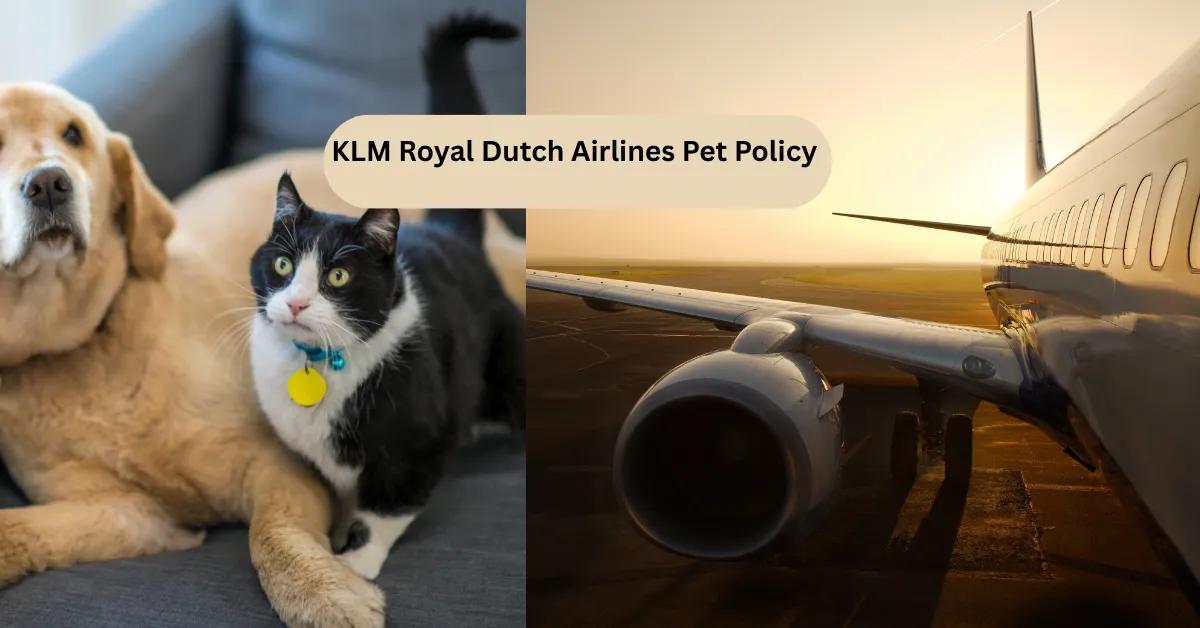
KLM Royal Dutch Airlines allows passengers to travel with cats and dogs through multiple options, depending on the pet’s size, weight, and travel needs. Small pets can accompany their owners in the cabin if they fit within the airline’s size and weight restrictions and remain inside an approved carrier under the seat. Larger pets may travel as checked baggage in the aircraft hold, which is temperature-controlled and designed for animal safety. For certain cases, especially long-distance or specialized transport, pets can also be shipped as cargo through KLM’s dedicated animal transport services.
To ensure availability, pet reservations must be made at least 48 hours before departure. However, booking earlier is strongly recommended because each flight has a limited number of spots for animals. Proper documentation, including vaccination records and health certificates, is also required to meet destination regulations and airline policies.
The "In-Cabin" Reality: Is Your Pet Actually Small Enough?
We all think our dogs are "small," right? But KLM has a very specific definition of small. If you want them under the seat in front of you—which, let’s be honest, is the only way to keep your anxiety levels down—they have to be a cat or a dog. That’s it. No hamsters, no birds, no "emotional support" iguanas.
-
The Weight Limit: Your pet plus the carrier cannot exceed 8 kg (about 17.6 lbs). This is a hard limit. If your Frenchie had too many treats and hits 8.5 kg, you’re looking at a one-way ticket to the cargo hold.
-
The Carrier Cage Match: The dimensions are 46 x 28 x 24 cm. If you’re using a soft-sided bag (highly recommended because they squish a bit), you might get away with an extra centimeter, but don't bank on it.
-
The Seating Drama: You can’t bring a pet in Business Class on intercontinental flights because those fancy "lie-flat" seats don't have under-seat storage. You’re stuck in Economy or Premium Comfort. Also, only one pet per person. Sorry, no cat-lady vibes allowed on one ticket.
A Quick Warning on "Snub-Nosed" Breeds
If you own a Pug, a Boxer, or a Persian cat, listen up. These guys have a hard time breathing at altitude. KLM is pretty strict—they won't let most snub-nosed breeds fly in the hold at all because of the health risk. If they can’t fit under the seat, they probably aren't flying. It’s a safety thing, but man, it’s a bummer if you’re moving overseas.
Shipping Them "Downstairs": The Hold
Okay, so your dog is a Golden Retriever. Obviously, he’s not fitting under a seat.
KLM Royal Dutch Airlines Pet Policy allows up to three pets in the hold, but the logistics are... a lot. The kennel has to be IATA-approved (basically a plastic fortress with bolts, not plastic clips). If the kennel plus the dog weighs more than 75 kg (165 lbs), or if the crate is massive (over 122 cm long), you’re looking at Cargo, which is a whole different beast involving warehouses and customs agents.
Pro Tip: If you have a layover in Amsterdam (Schiphol) that’s longer than 3 hours, your pet can’t go in the hold. They don't want the animals sitting in a cage for half a day. If you’re transiting through Paris, that limit is 4.5 hours. Plan your connections like a hawk.
What’s This Going to Cost Me? (The Fees)
Airline fees are the absolute worst. It’s never a flat rate because why would anything be simple?
Expect to pay anywhere from €70 to €400 per one-way trip.
-
Short hops within Europe: Usually on the lower end, maybe €75-€100.
-
Long-haul (e.g., NYC to Amsterdam): Expect to shell out closer to €200-€400.
You pay this at the airport or when you call to reserve. And for the love of everything, call them. Don't just show up. You have to reserve a spot for your pet at least 48 hours in advance. There are only a few "pet spots" per flight, and once they’re gone, they’re gone. I’ve seen people forced to take a flight the next day because they didn't call ahead.
The Paperwork Headache
This is where the "messy experience" comes in. If you’re flying internationally, your pet needs a passport. Yes, a literal pet passport (mostly an EU thing) or a massive stack of health certificates.
-
Microchips: Must happen before the rabies shot. If you did it the other way around, the vet has to redo the shot. Don't ask me why; the bureaucracy loves its sequences.
-
The CDC Form (USA): If you’re headed to the States, there’s a new-ish "Dog Import Form" you have to do online. If your dog is young (under 12 months), you have to do it 15 days before you fly.
-
Vaccinations: Rabies is the big one. Most countries require it to be at least 21 days old, but not expired.
Weird Little Rules You’ll Probably Forget
-
No Food in the Air: Don't feed them two hours before takeoff. Trust me, a motion-sick dog in a tiny bag under your feet is a smell you’ll never forget.
-
The "Stand Up" Rule: Technically, the pet must be able to stand up and turn around in the carrier. I’ve seen agents who don't care, and I’ve seen agents who make the dog do a little dance to prove it.
-
Empty Bowls: If they’re in the hold, you need to attach two empty bowls to the door that can be filled from the outside.
Is It Worth It?
Honestly? Flying with a pet is stressful. KLM is great—the crew usually loves seeing a kitten peek out of a bag—but the prep work is a part-time job. If you’re just going for a week, maybe leave them with a sitter. But if you’re moving or going on a long haul, just over-prepare. Double-check the kennel bolts, print three copies of every health form, and bring some pheromone spray to calm them down.
|

|

|
|
|
|

|

|
|




Leave a Reply