

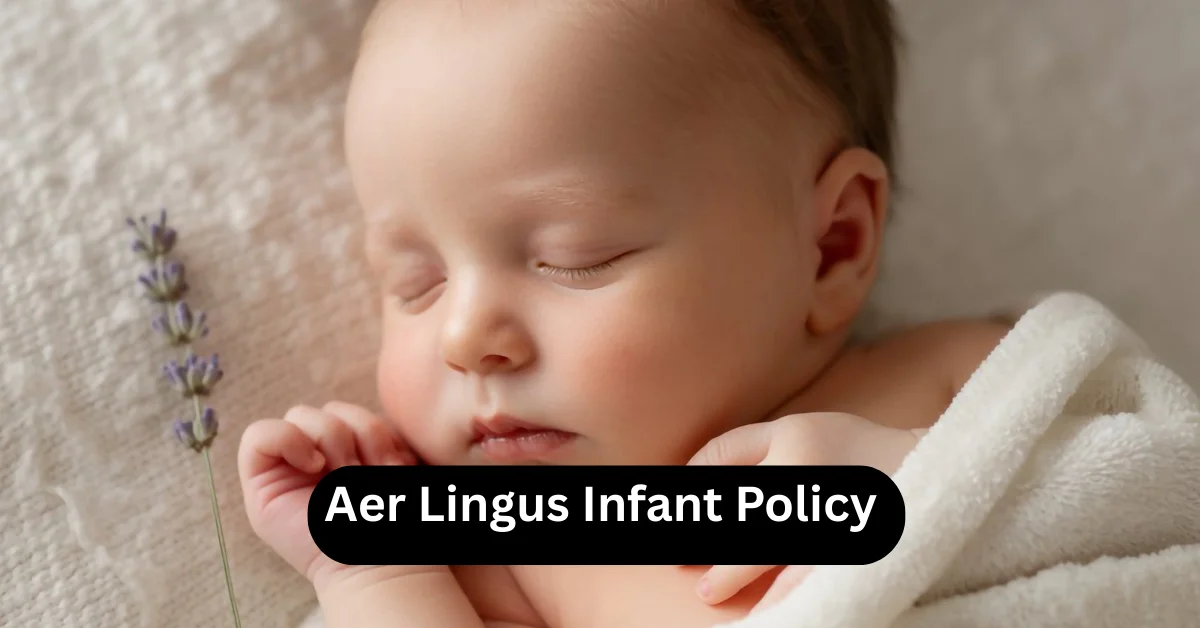
Flying with a baby can feel both exciting and a little overwhelming. From packing essentials to managing feeding schedules and naps, there’s a lot to plan. Understanding the Aer Lingus Infant Policy in advance can make your journey much smoother and less stressful.
This guide explains everything in clear, simple language—no confusing airline terms—just practical information and helpful tips for parents traveling with infants.
Understanding the Aer Lingus Infant Policy
Under the Aer Lingus Infant Policy, an infant is defined as a child under 2 years old on the date of travel. Once your child turns two, they must travel in their own seat under standard child fare rules.
Aer Lingus offers two main travel options for infants:
- Traveling as a lap infant (on an adult’s lap)
- Booking a separate seat for the infant
Each option comes with different costs, comfort levels, and safety considerations.
Minimum Age for Infants to Fly
Aer Lingus generally allows infants to travel from 7 days old.
However:
- Premature babies may require medical clearance
- Very young infants should only travel if medically safe
- Consulting a pediatrician before flying is always recommended
Lap Infant Travel Rules
Many parents choose a lap infant travel, especially for short journeys.
What Is a Lap Infant?
A lap infant:
- Is under 2 years old
- Travels on an adult’s lap
- Does not occupy a separate seat
This option is more affordable but requires extra attention during the flight.
Cost of Lap Infant Travel
The cost varies by route:
- Short-haul flights: Usually a small fixed fee
- Long-haul flights: Typically, a percentage of the adult fare, plus taxes
While cheaper than a full ticket, lap infant travel is rarely completely free.
Booking a Separate Seat for Your Infant
For added comfort and safety, many parents prefer booking a separate seat.
Benefits of a Separate Seat
- More space for both parent and child
- Ability to use an approved car seat
- Better comfort on long-haul flights
This option is more expensive but often worth it for longer journeys.
Approved Car Seats & Child Restraints
If your infant has their own seat:
- The car seat must be airline-approved
- It must fit within the aircraft seat dimensions
- Both rear-facing and forward-facing seats are typically allowed
Always check size and compatibility before traveling.
Infant Baggage Allowance
Aer Lingus offers helpful baggage allowances for infants.
Checked Items (Free of Charge)
- One stroller/pushchair
- One car seat
Carry-On Essentials
Parents can bring:
- A diaper bag
- Baby essentials such as food, formula, and clothing
Keep in mind: the diaper bag is usually counted within the adult’s cabin allowance, so pack efficiently.
Stroller Policy
Traveling with a stroller is straightforward:
- Lightweight strollers can be gate-checked
- Larger strollers may need to be checked at the counter
- Strollers are typically returned at baggage claim
Gate-checking is especially useful in large airports.
Bassinet Availability
On some long-haul flights, Aer Lingus offers bassinets for infants.
Key Rules:
- Available on a first-come, first-served basis
- Must be requested in advance
- The infant must meet weight and size limits
Bassinets are particularly helpful for overnight flights.
Seating Rules for Infants
There are a few important seating guidelines:
- Infants cannot sit in emergency exit rows
- Only one lap infant per adult
- Bassinet seats are limited and assigned by the crew
Booking early improves your chances of getting preferred seating.
Safety Rules Onboard
Safety is always a priority:
- Lap infants must be held securely during takeoff and landing
- Crew may provide an infant seatbelt extension
- Following crew instructions is mandatory
Feeding Your Baby Onboard
Aer Lingus supports infant feeding during flights:
- Breastfeeding is allowed
- Baby formula and milk are permitted through security
- Cabin crew can provide warm water (if available)
Feeding during takeoff and landing can help reduce ear pressure.
Traveling with Baby Food & Liquids
You can carry:
- Baby food
- Formula
- Sterilized water
These items are usually exempt from standard liquid restrictions but may be screened at security.
Changing Facilities Onboard
Most Aer Lingus aircraft are equipped with:
- Changing tables in the lavatories
- Compact but functional spaces
Be sure to bring your own supplies, as they are not provided.
International Travel with Infants
When flying internationally:
- Infants must have a valid passport
- Some destinations may require a visa
- All travel documents must match the booking details
Always double-check requirements before departure.
Medical Considerations
Before flying with an infant, consider:
- Ear pressure sensitivity
- Hydration needs
- Exposure to illness
If your baby has health concerns, consult a doctor before traveling.
How to Book Infant Travel
You can add an infant:
- During initial booking
- Through Manage Trip
- By contacting customer support
Booking early helps secure bassinets and better seating options.
Traveling with Twins or Multiple Infants
Special rules apply:
- One lap infant per adult
- Additional infants require their own seat
Planning is essential for seating and safety compliance.
Common Mistakes to Avoid
Many parents face avoidable issues:
- Waiting too long to add infant details
- Assuming bassinets are guaranteed
- Overpacking cabin bags
- Forgetting travel documents
Proper preparation makes a big difference.
Tips for Stress-Free Travel
- Choose aisle seats for easier movement
- Board early when possible
- Pack extra clothes and diapers
- Keep comfort items within reach
Final Thoughts
The Aer Lingus Infant Policy is practical, safe, and fairly parent-friendly. Whether you choose to travel with a lap infant or book a separate seat, understanding the rules in advance helps avoid surprises.
While flying with a baby may never be completely stress-free, good planning and the right expectations can make the experience much smoother—and even enjoyable.
|

|
|
|
|
|

|
|

|




Leave a Reply